A book by Vincent Joris
The Sensologic Method
The science and art of making sense — and why people mostly don’t
Drawing on neuroscience, psychology, and cultural sociology, Vincent Joris explains why the same world looks different from every perspective — and gives you the tools to communicate, design, and connect across those differences.
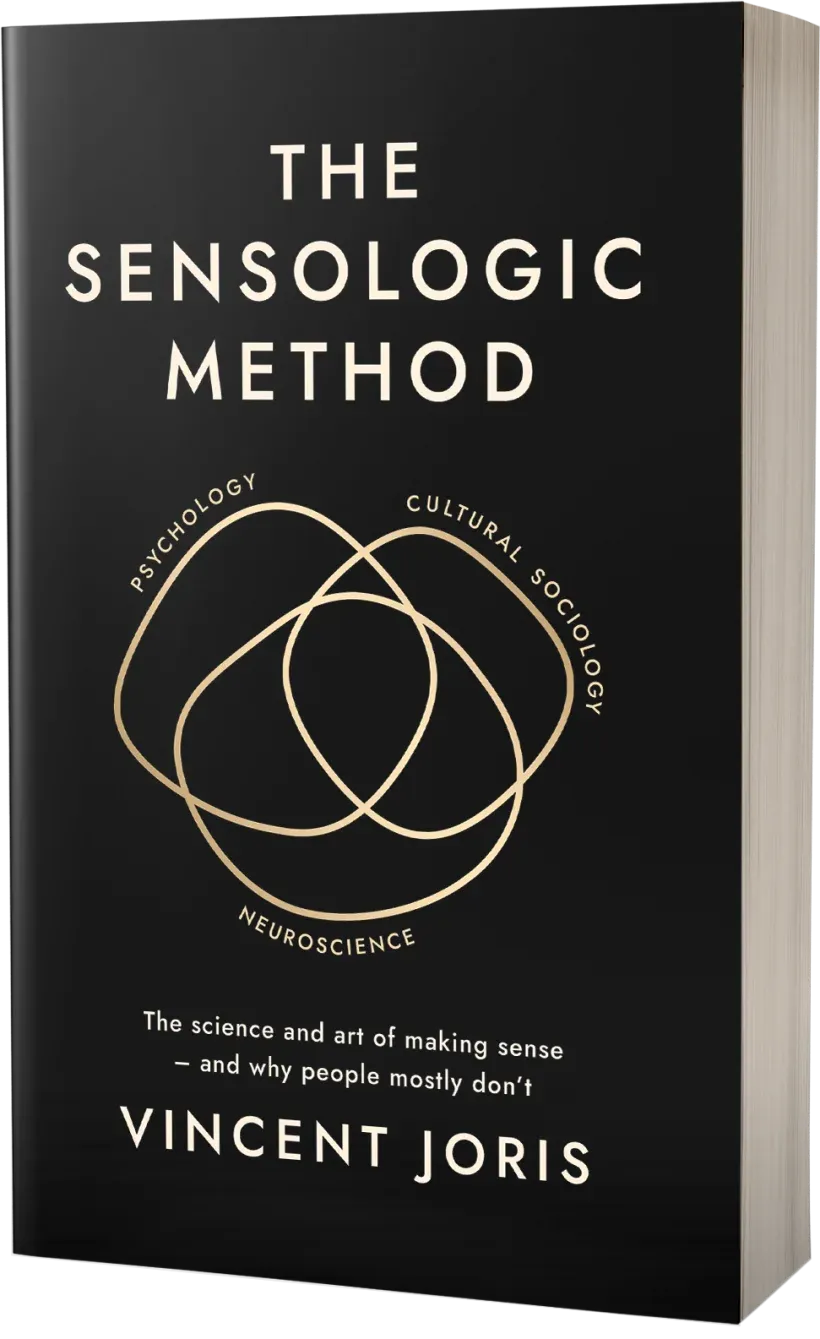
Why do two smart people look at the same situation and walk away with completely different stories — both entirely certain that their version is the right one?Why does a message that lands perfectly in one context produce confusion in another?
Three lenses. One story.
The answer is in the way sense-making works. Human sense-making is a construction, built from the brain and senses you experience the world through, the accumulated library of everything you’ve lived through, and the invisible cultural rulebook you absorbed before you were old enough to question it. Three disciplines, working simultaneously, producing a story that feels like reality.
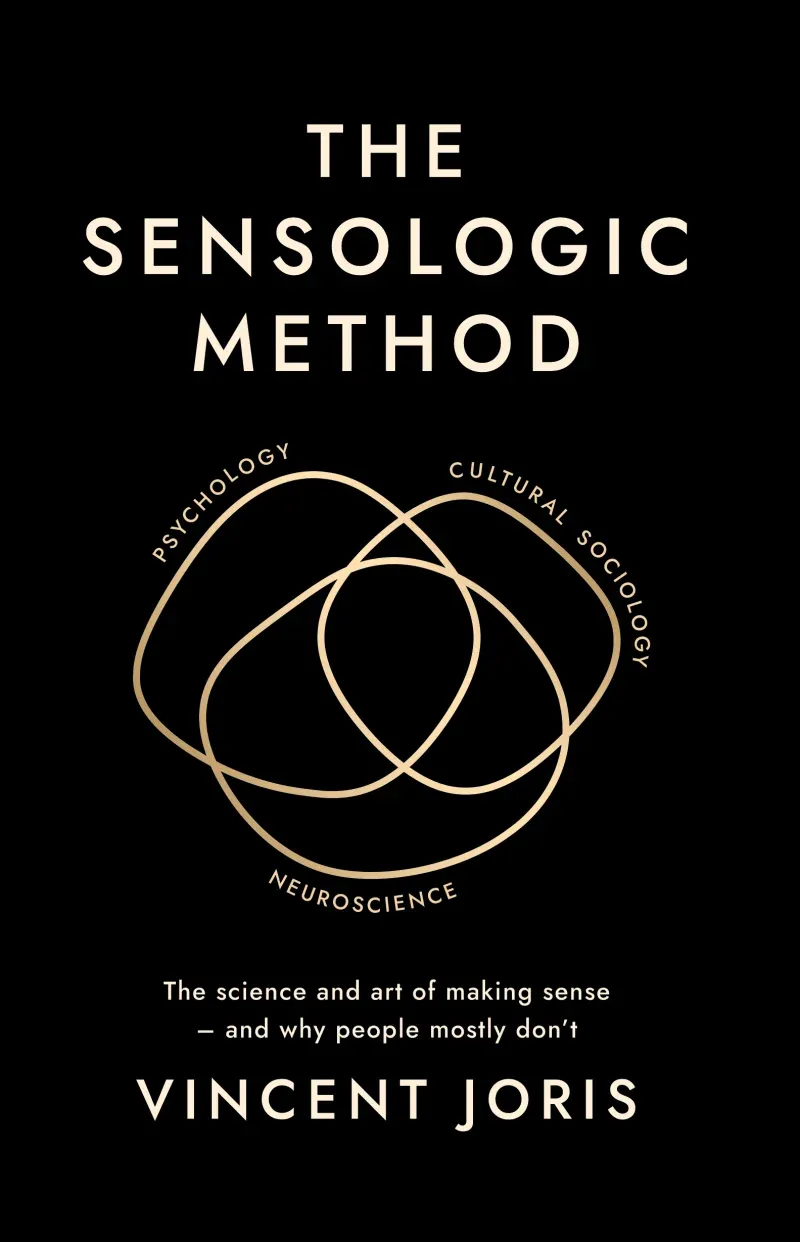
The book
Making sense of human weirdness
The Sensologic Method is an exploration of human sense-making, with a working framework to be used in meetings, teams, brands, and relationships where sense-making is breaking down.
An in-depth guide that is still accessible, written with a warm, personal, sometimes witty voice.
For fans of Rory Sutherland and Erin Meyer.

About the author
Vincent Joris
Vincent has spent twenty years helping brands make sense to people — at Microsoft, VML/WPP, and beyond. His work has taken him from Belgium to Denmark to Rwanda to the United States, where a growing passion for neuromarketing led him to ask why the same idea lands brilliantly with some people and falls flat with others.
The overlap is never perfect, and that imperfection is where human weirdness lives.